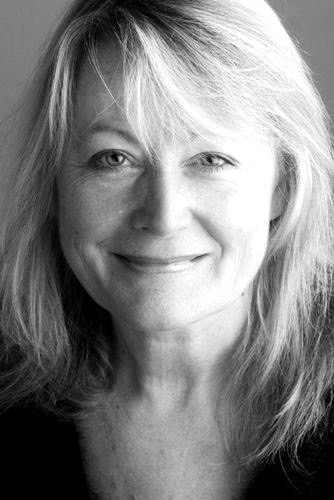
Hello and welcome! I am Colin Bell, a novelist and poet, previously a TV producer-director of arts programmes, also known as the blogger Wolfie Wolfgang. My novel Stephen Dearsley's Summer Of Love was published in 2013, my next novel Blue Notes, Still Frames will be published in October 2016 - check them out on Amazon. I hope you find something here among my daily blogs. I write about anything that interests me - I hope it interests you too. Let me know.
I have two new Fibonacci poems published today in the splendid Fibonacci specialist journal, The Fib Review. It's always a challenge to try to squeeze big things into little boxes but I had a go when I picked the great, melancholy and alcoholic Finish composer Jean Sibelius as the subject of one of these miniature syllable-count poems that are based on the so-called Fibonacci Code with the sequence of numbers 1, 1, 2, 3, 5, 8, 13, 21 etc. In the second poem, I try to take us back to our common ancestry in Africa.
Here's the link - there are a lot of other Fibs there too - well worth you reading.
If you have never heard Sibelius' music, take a listen to this, the finale from his 5th Symphony. It is thrilling - you might even hear those swans flying.
My new novel, Blue Notes, Still Frames is now officially published and generally available from online sites as well as bookstores and it's now time to announce the book's Brighton launch which will take place on Thursday, 2nd March at the splendid Have A Word event, brain child of the enthusiastic and energetic host, Ellis Collins. As Blue Notes, Still Frames is the second in my series of Brighton-themed novels, it's seems right to give it a grand Brighton send off so i'm delighted to be reading in my home town with my good friends and fellow novelists, VG Lee and Allie Rogers. Music is an important theme in the novel so it is doubly appropriate that Brighton band Octopuses will be there too, playing music from their current album, Yes Please, and, I'm told, songs from their projected new album too. As Octopuses is my son Adam Bell's band this will make the show a family affair.
Family too is VG Lee, or so it seems, as her work is published by Ward Wood Publishing, http://www.wardwoodpublishing.co.uk/ as are both my novels. My good friend VG Lee, is also a Sussex writer, and her novels are both wonderfully funny and powerfully poignant. Her latest, Mr Oliver's Object of Desire came off the Ward Wood production line just ahead of mine. It's a great and entertaining work and VG Lee is a terrific performer, so her reading will be terrific, I know.
I'm really happy too that the other reader on the night will be another of my friends, fellow Brighton novelist, the highly talented Allie Rogers who will be reading from her debut novel, Little Gold, due to be published by Legend Press in May this year. http://www.legendtimesgroup.co.uk/legend-press/books/1446-little-gold
To put you into the mood, take a listen to Octopuses' latest single, Not The Bees, now officially endorsed by Caroline Lucas and the Green Party. They are great, believe me, hear it for yourself:
Copies of my new Brighton novel arrived today - hurray! Now that I have the actual physical objects, I really feel like it's been published.
Stephen Dearsley, from my first novel, Stephen Dearsley's Summer of Love, isn't a bit jealous that he has a new companion - it's a bit like having a baby brother - or maybe not. Anyway, I feel like a new child has been born.
Many thanks to Ward Wood Publishing, and especially to Adele Ward, for producing such a beautiful book. Thanks and admiration to to Kayla Bell who designed the brilliant Modernist cover - I love it.
So folks, it really is out there now -Blue Notes, Still Frames is my second Brighton novel and it moves forward to 1994 - My first Brighton book, Stephen Dearsley's Summer of Love was set in 1967. Here's the publisher's blurb, if you want to know what it's all about.
You can buy the paperback edition a number of ways. Either directly from the publishers:
Or, of course, you can order it from your local independent bookshop. Mine, here in Lewes is the excellent independent bookseller Skylark - the owner, Matt Birch is a champion of Lewes' artist community and for that we are all grateful.
He is stocking both my novels so go and see him at the Needlemakers, West Street, Lewes, or contact him via his website:
Great news! My new novel has arrived. It's always a thrilling moment to see it in print after the three years of drafts and redrafts. Yes, it really exists - that's my first reaction. It looks great too. So thanks to my publishers, Ward Wood Publishing, and to the cover designer, the hugely talented Kayla Bell.
Blue Notes, Still Frames is my second Brighton novel and it moves forward to 1994 - My first Brighton book, Stephen Dearsley's Summer of Love was set in 1967. Here's the publisher's blurb, if you want to know what it's all about.
You can buy the paperback edition a number of ways. Either directly from the publishers:
Or, of course, you can order it from your local independent bookshop. Mine, here in Lewes is the excellent independent bookseller Skylark and they will be stocking both my novels:
I shall be doing my first reading from the new novel tonight, here in Lewes, at the latest Needlewriters event at the lovely Needlemakers centre, in West Street, with my friend, the poet and novelist Kay Syrad and the science fiction writer, Matthew De Abaitua, whom I'm yet to meet. It should be a fun evening so, come along if you can. It would be great to see you there.
Here's the Needlewriters' web link to give you more information about the writers:
P.S. The readings went really well last night at Lewes' Needlewriters' event - I left feeling that new new book is well and truly 'out there'. My thanks to Janet Sutherland and the Needlewriters' committee for their support and for asking me to read. It's a lovely event.
I'm waiting neurotically for the printed copies to arrive and also for the Kindle edition to be published. Exciting times. This will be my second Brighton novel. My first, Stephen Dearsley's Summer of Love, was set in 1967, but, this time, it's in the year 1994. Here's the blurb that will appear on the back cover:
'Colin Bell transports us back to Brighton in 1994 for his second novel Blue Notes, Still Frames, with a full cast of characters drawn together through the music and photography of the title.
Busker Joe lives on the beach with his flute and his troubled Goth girlfriend, Victoria, who’s a singer. He borrows a bath towel for her from Rachel and Alan, a prosperous young couple from the rapidly growing world of computers. The meeting will change all their lives…and other lives too.
There’s Harry, a beach bum drummer; Nico, a transient American who takes revealing photographs of passers-by; Kanti and Diep, mysterious artist twins from Nepal; Lionel and John who reveal more than their bodies on the nudist beach; and pub landladies Jacqueline and Rosemary who top up their income by dabbling in the sex trade.
Joe is always there weaving more than melodies with his flute.'
The reading will take place at the Needlemakers in Lewes, the splendid quarterly literary event where I was invited to read from my first novel too. I'm lucky to be sharing the billing with a friend, the novelist and poet, Kay Syrad and science fiction author Matthew De Abaitua. It should be an entertaining evening.
Matthew De Abaitua is an Arthur C Clarke Award shortlisted author of science fiction. His second novel If Then is set in Lewes in the near-future and was written in the flat above the Needlemakers. Locus described it as 'full of magisterial weirdness, melancholy joy and hopeful terror. If I begin to toss out names like Adam Roberts, Brian Aldiss, and J. G. Ballard, I will not be lavishing undue praise.'
Kay Syrad's publications include a poetry collection, Double Edge (2012), two novels, The Milliner and the Phrenologist (2009) and Send (2015), which investigates pre-verbal experience; and Exchange, an art-text work with Chris Drury (2015). Her artist’s book work of the lightship men: 1000 tasks (2013) was bought by the National Maritime Museum. She is Poetry Editor of Envoi and co-founder of the VERT Institute for art events & writing in Laughton.
Before becoming a writer,Colin Bell worked as a TV producer-director and executive producer making arts programmes for ITV, Channel Four, the BBC and also for American, Japanese and German broadcasters. His first novel, Stephen Dearsley's Summer of Love (Ward Wood Publishing, 2013) was long-listed for the Polari Prize. His second novel, Blue Notes, Still Frames is due out in January. His poetry has been published in the UK and the USA where it has been nominated for the 2017 Pushcart Prize.
I'm celebrating today and it's not all about numbers. They figure strongly in writing the usually short poetry form the Fibonacci poem which is based on the so-called Fibonacci Sequence of numbers.
The latest issue of the world's leading Fibonacci poetry journal, The Fib Review, is published today in its 25th issue on its 10th anniversary and, yes, my four new Fibs bring my total 66 of poems published by the Fib Review. All these numbers are worth celebrating I think.
It may all look a bit dusty and arithmetical in the diagram but these numbers form a beautiful sequence that can be found in nature, in science, in engineering and, yes, in art. The sequence consists of numbers where each is the sum of the previous two, rising in numerical order and which can be seen in natural shapes made from this ratio of numbers. It is the beauty of the sequence that has tempted poets to use the sequence as a way of ordering words and lines in poetry.
I have been writing Fibonacci poetry for eight years now by counting the syllables in each line so that the lines correspond to the sequence: 1, 1, 2, 3, 5, 8, 13, 21, 34. Until now, I've never dared to go any higher in the numerical order but in two of my new poems I have added 55 syllable lines. I'm delighted that they are to be included in the new publication of The Fib Review. Take a look, not just for my new poems but for the fascinating variations on the form achieved by all the other poets, from all over the world, published there:
Leonardo Bonacci, known as Fibonacci (c1170 - c1250)
The Fibonacci Sequence is credited to the Italian mathematician Leonardo Bonacci who was also known as Fibonacci. He introduced this ancient Asian sequence into Western Europe in the 13th Century and it has fascinated mathematicians, scientists, artists, engineers and poets ever since.
In a collaboration with the multi talented American film-maker Joseph Nussbaum, another of my Fibonacci poems has been turned into a miniature movie using the virtual world of Second Life as its starting point. The result, I think, is really original. The poem, Brief Encounter (published in The Fib Review - Musepie Press) makes a romantic and powerful film . The poem was written in strict syllabic count according to the Fibonacci Sequence (1,1,2,3,5,8,13 etc.) and is one of many of my 'Fibs' to be published in that excellent poetry journal The Fib Review. Here's a link to the poem as it appeared there in 2011: http://www.musepiepress.com/fibreview/…/wolfiewolfgang4.html
The very concise form of the poetic style translates well into the equally concise filming style of Joseph Nussbaum - it was a happy coming together of different art forms making, I think, what looks like a Contemporary Dance piece. Poetry and Dance as Film - a great combination. Take a look:
I wrote a miniature Fibonacci poem five years ago on the gigantic subject of humanity's ideas of the Universe and religion - well, there's no need for humility if you're writing a very short poem. It was called The Music Of The Spheres and was published in that excellent poetry journal The Fib Review: http://www.musepiepress.com/fibreview/issue10/wolfiewolfgang2.html - I hadn't thought about it much since then until recently when the highly imaginative Joseph Nussbaum approached me asking to make a short animated film of the poem.
I was thrilled earlier on today to see the result. Wow! I think it's magnificent. See what you think:
David Bowie and Marc Bolan in rehearsal at Granada Television in 1977.
In the early years of my TV career at one of Britain's leading independent television companies, Granada, I came across many famous people and soon found out that celebrities, like people you meet in a bus queue, are usually no more extraordinary or unusual than anyone else you might encounter that day. Sometimes though, even a full-of-himself young TV employee could be impressed by a sudden explosion of star-dust. First it was Marc Bolan, the glamourously charismatic lead singer of the band T-Rex. Marc was making a series, called Marc, for Granada and I was working in the music department there. We met over some backing-track issue which is now long forgotten, but we hit it off well enough to go for a few drinks together while he was staying in Manchester. His days of mega-stardom were waning and, sometimes, a beer encouraged him to open his heart. We got on. For the final show in the series, he'd asked his old friend David Bowie to take part. This was a bit of a coup because Bowie at that time had just recorded the album Heroes, one of my favourites, and he performed the song for the first time in that programme.
I had been a fan of David Bowie since the Ziggy Stardust days and couldn't believe that the great man was actually in the Granada studios. Anyway, he was and, as I found out, he was as normal a bloke as the next man - charming and talented too of course. I was going for what is euphemistically called a bathroom break and it happened to coincide with a break in rehearsals for Marc. Without a thought, I walked into the male toilets situated under my office and next to the studio entrance. It was there, unglamourously no doubt, I found myself in glittering company. After, the call of nature, three guys washed their hands and Marc introduced me to Bowie, who was quiet, pleasant and remarkably low-key. We shook newly-washed hands and went our separate ways.
Many years later, wanting to make some commemorative gesture after David Bowie's unexpected death, I decided to write one of my Fibonacci poems about the incident. Today, along with two other new poems, it is published in the latest issue of the Fibonacci specialist journal, The Fib Review. I'm an enthusiast for this demanding short-form poetry style and I feel honoured and fortunate that The Fib Review has supported me over the last eight years by publishing my work - with these three new ones, they have now published 62 of my 'Fibs'.
David Bowie, of course, was not the only one of those two stars to have died since that meeting. I met Marc again for a drink before he left Manchester and we said, as you do, we should get together again the next time he was in town. That wasn't to be because a very short time later he was dead, within the month I think, but my memory is unclear about the dates. I was genuinely shocked and saddened after my first real encounter with the death of a celebrity.
So here's to Marc Bolan and David Bowie - it was an honour to have met you guys.
Here's that recording of David Bowie singing Heroes and then, a clip of the two of them closing that final show:
I have lived long enough now to have seen a transformation in the art of photography. Not that I'd call myself a photographer, but I been taking photographs since I was a child and I've always been entranced by the possibilities of even the simplest of cameras. As a schoolboy, I won a photographic competition once but that was a long time ago. Since then, I've just been using my various cameras for my own pleasure, mostly as a record of my family and friends but when that amazing digital revolution got to me, in 2007, I found new excitement with a great digital camera, the Cannon EOS 400D, bought in Hong Kong and loved ever since. Since living in Lewes, UK, I've been friends with a real photographer, David Stacey http://www.davidstaceyphoto.com/ who has not only inspired me with his own work but encouraged me to experiment more with my own camera.
David Stacey - I dared to take this photograph of the photographer, last year.
Dave even turned his camera on me a few times and this portrait now hangs on a wall at home - like it or not, I think it captures the spirit of my life here in Lewes.
Me by David Stacey
David Stacey at work in my study.
I spent a day with Dave recently when we went to an exhibition as the excellent Pallant House Gallery in Chichester and, over a boys' pub lunch, we discussed cameras and photography as we often do. It was there that Dave inspired me to give Instagram a go. He said he thought I'd really like this the most creatively challenging and excitingly instant of all of today's social networking sites. I said I'd have a go and, a month later, I'm still doing it and, yes, loving it too. I've been taking at least one photograph a day for the site and I'm gradually learning how to master the various editing options. You can see how I've been getting on by following the link below.
The other revolution in my on-line world is that those photographs taken for Instagram can be linked to various other sites - so I'm now an enthusiastic member of the photography site Flickr: https://www.flickr.com/photos/16199705@N05/
Needless to say, these pictures also go directly to my Facebook and Twitter pages so after a relative silence here on my website, I'm suddenly all over the wonderful world-wide web and having lots of fun all of which I owe to my good friend David Stacey. Thanks Dave.
I haven't posted many blogs on here this year. Forgive me, regular readers, I've been busy finishing a novel for publication later this year and now I'm getting on with a new one so I've been heads down all year but plan to get back to blogging again very soon.
In the meanwhile you can follow me on all of the above sites as well as on Facebook and Twitter - I hope to see you around in cyberspace and, of course, here on this site.
Today I'm celebrating the publication of two more of my Fibonacci poems, Castle Walk and The Flying Dutchman, in that great specialist Fibonacci journal, The Fib Review which is published today and can be found with the following link:
The Flying Dutchman by Albert Pinkham Ryder (1847 - 1917) Smithsonian Museum, Washington DC
One of my two poems uses The Flying Dutchman as its starting point. The Flying Dutchman legend concerned a cursed sea captain condemned to travel the seas for eternity with a crew of ghosts, only allowed to come ashore once every ten years. Sometimes the ship is called The Flying Dutchman, other versions of the legend claim that the name applies to the unfortunate captain, punished for a serious sin, possibly cursing the Crucifixion. Wagner wrote a well-known opera on the subject but I was trying something much more modest, a very short syllable-count Fibonacci poem, using the Dutchman as a symbol for a turbulent state of mind.
I've been writing these challenging short-form poems since 2009 and many of them (well, 59 so far) have been published by The Fib Review. They are based on the Fibonacci Code, introduced into Europe in the 13th Century by the Italian mathematician/merchant, Leonardo Bonacci, known as Fibonacci who learnt about on his Arabian travels. The Fibonacci Code is a mathematical system were each number in the sequence is the sum of the two previous numbers. It is, believe me, much more flexible as a poetic form than you might imagine until you try it. Why not have a go.
Fibonacci (Leonardo Bonacci) c.1170 - c.1250
I can't leave you without giving you at least a taste of Wagner's music for The Flying Dutchman - here's New York's Metropolitan Opera Orchestra conducted with typical bravura by James Levine:
My thanks are due to the multi-talented Joseph Nussbaum for his film, so carefully made, of my poem Silent House. It was a great experience sharing brains with such a perceptive director. It's great when that solitary poet life can be shared like this. I loved Tim Risher's music too. Here are a couple of stills and, below, a copy of the film. Hope you like it...I shall be keeping it, with the other films of my work, in the video column on the right of this page
I'm thrilled this week to be told that I've been nominated for the prestigious Pushcart Prize by American publisher Musepie Press who have been publishing my poetry in two of their journals, Shot Glass Journal and The Fib Review since 2009.
The nominated poem, Visitation, is published with three of my other new Fibonacci poems in the new issue of The Fib Review which has now published 57 of my Fibs, short poems written to a syllable count according to the Hindu-Arabic numerical system introduced to the West by the Medieval mathematician Leonardo Bonacci (c.1170 - c.1250), known as Fibonacci.
Fibonacci's statue in Pisa.
The Fibonacci Sequence finds a pattern in numbers - one that is repeated in nature but which can also be an exacting but satisfying master for short form poetry. It has been my personal passion for some years now discovering how varied the possibilities are in writing within such a tight set of criteria.
My Pushcart nominated poem, Visitation can be found by following this link:
So thank you Musepie Press, on behalf of all Fibonacci poets, for nominating my poem.
Here is some information about the Pushcart Prize:
'The Pushcart Prize: Best of the Small Presses series, published every year since 1976, is the most honored literary project in America.
Since 1976, hundreds of presses and thousands of writers of short stories, poetry and essays have been represented in our annual collections. Each year most of the writers and many of the presses are new to the series. Every volume contains an index of past selections, plus lists of outstanding presses with addresses.
The Pushcart Prize has been a labor of love and independent spirits since its founding. It is one of the last surviving literary co-ops from the 60's and 70's. Our legacy is assured by donations to our Fellowships endowment.'
I'm often under scrutiny in my small Lewes urban garden but I'm getting used to it. I live next door to a one-eyed Siamese cat and, without actually being on speaking terms, we have a pleasant enough relationship which I have now recorded in one of my new Fibonacci poems published today in Issue 22 of The Fib Review.
Sometimes it's good to have a solid but silent relationship with someone who likes my garden as much as I do.
If you want to read my new poem along with the other three poems in The Fib Review, here's a link:
Don't just read it for my work though - there's a lot in this excellent journal and i'm proud to be included there again for the eighteenth consecutive time.